

I believe human health is perhaps the most important issue for humanity! Most of us leave no plant unused in pursuit of a healthy life, no health center unvisited, no medicine untaken, and virtually no measure unexplored.
The year is 2015… A time when human life expectancy is still on an upward trend. At least for now!
Everything for a healthy and long life!

I believe there is one issue we are not paying enough attention to!
HEALTHY FOOD…
But how can we achieve this? One of today's popular and seemingly practical sayings is: "A doctor in every home." Is having a doctor in every home enough to ensure a healthy and long life?
Let me ask you a question:
Is it more important to cure someone after they become ill or to work toward preventing them from becoming ill in the first place?
Advances in medical science and the work of our doctors are extremely important for human health. However, preventing people from becoming ill appears to be equally important. As history progresses and technology develops, both positive and negative consequences emerge. Since our subject is agriculture, consider the following example: while a decare of land once yielded 200 kg of raisins, yields of 400–1,000 kg have now become normal. Alongside advances in agricultural technology, the pesticide and chemical fertilizer industries have contributed significantly to these increases in productivity. However, public health must be taken into consideration during both the production and application of these chemical fertilizers and agricultural pesticides.
Our world has experienced numerous disasters throughout history, including the following:
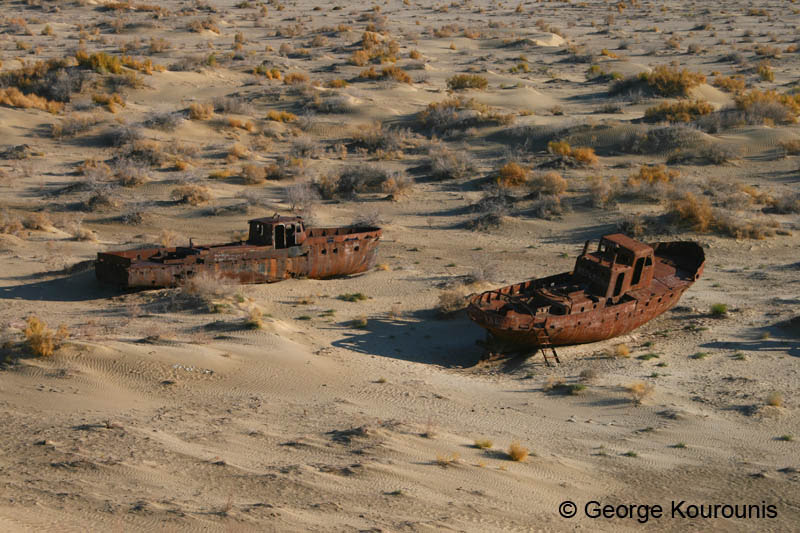
Aral Sea:
Located in Western Turkestan between Uzbekistan and Kazakhstan, with a large portion belonging to Uzbekistan, the Aral Sea was once the second-largest lake in Asia and the fourth-largest in the world. Its surface area ranged from 64,500 to 68,700 square kilometers. Once a vast inland sea, it has now largely turned into a desert.
Bhopal Disaster (1984):
On December 2, 1984, a major gas leak occurred at a pesticide factory owned by the American company Union Carbide in Bhopal, Madhya Pradesh, India. The state government reported that 3,787 people living in the surrounding area died immediately. A further 3,000 deaths were reported within weeks, followed by another 8,000 deaths. The total death toll approached 15,000. The number of injured people was reported as 558,125, of whom 38,478 suffered temporary disabilities and 3,900 were left with severe and permanent disabilities.
Chernobyl Disaster (1986):
On April 26, 1986, the explosion of Reactor No. 4 at Chernobyl released radiation into the atmosphere equivalent to 100 times that of the atomic bombs dropped on Hiroshima and Nagasaki. Radioactive clouds were carried by winds as far as South Africa. Rainfall brought radioactive contamination to the ground in the Black Sea region and Edirne. According to even the most conservative estimates, an area of 146,000 square kilometers across three countries was exposed to radioactive contamination. This is equivalent to approximately half the area of Italy. Agricultural land covering 52,000 square kilometers, roughly the size of Denmark, was also contaminated. Although 22 years have passed since the disaster, hundreds of villages in the affected region remain closed to settlement due to continuing serious health risks.
Exxon Valdez Environmental Disaster (1989):
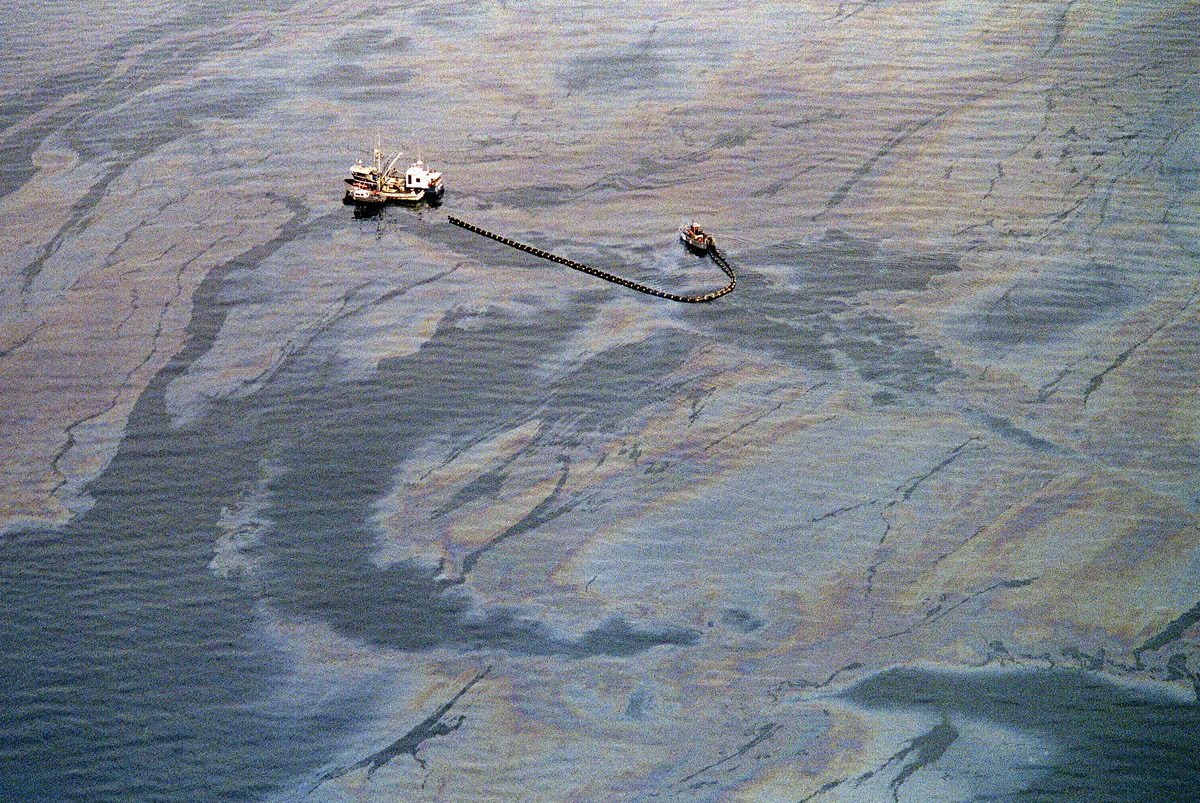
This incident, which occurred in March 1989, is considered one of the largest human-caused environmental disasters in history. According to official figures, 10.8 million gallons of oil spilled into the sea from the Exxon Valdez oil tanker. Wildlife in the region was severely affected, and numerous animals, ranging from seabirds to killer whales, died. Cleanup efforts were largely ineffective due to the region's geographical conditions and the unprecedented scale of the accident. The incident went down in history as one of the worst environmental disasters. Environmentalists argue that the region may never fully recover. Although Exxon Mobil officials claim that all the spilled oil has been cleaned up, the natural environment has still not returned to its previous state. The Exxon Valdez tanker accident profoundly disrupted the ecological balance.
BP Deepwater Oil Disaster (2010):
In 2010, an explosion involving underwater equipment at the Deepwater Horizon oil drilling rig in the Gulf of Mexico, off the coast of the United States, claimed the lives of 11 people. The resulting oil spill continued for three months and caused a major environmental disaster. It was subsequently announced that BP would face one of the largest financial penalties in American history.
Fukushima I Nuclear Power Plant Accidents (2011):
The Fukushima I nuclear accidents were a series of events that resulted in the release of radioactive materials into the atmosphere at the Fukushima I Nuclear Power Plant on March 11, 2011, following the Tōhoku earthquake and tsunami. Experts described the accidents as the second-largest nuclear disaster after Chernobyl. However, because problems occurred across multiple reactors, the incident became one of the most complex nuclear accidents in history.
The Fukushima I Nuclear Power Plant accidents occurred following the magnitude 9.0 Tōhoku earthquake and tsunami on March 11, 2011. The earthquake, which struck off the coast of Honshu Island, triggered a massive tsunami in Japan. The tsunami caused the shutdown of the nuclear power plant's three operating reactors. The facility contained six boiling water reactors operated by the Tokyo Electric Power Company (TEPCO).
The tsunami damaged the electrical grid and flooded the plant's generators, causing a power outage. The subsequent loss of cooling led to partial meltdowns and explosions, creating problems in all six reactors and the central spent fuel storage facility. Concerns over radiation leaks prompted the evacuation of an area extending 20 km around the plant, during which between 170,000 and 200,000 people were evacuated. Workers at the facility were exposed to high levels of radiation.
On April 11, 2011, Japan's Nuclear Safety Agency raised the severity rating of the radioactive release at the Fukushima Daiichi Nuclear Power Plant to Level 7 on the International Nuclear and Radiological Event Scale, placing it at the same level as the Chernobyl reactor disaster. It was announced that a final decision on assigning the highest disaster classification could subsequently be made by a team of international experts.
An aging world, advancing technology, changing consumer demands...
And now I ask once again.

Is it more important to cure someone after they become ill or
to work toward preventing them from becoming ill?
We should expect evolving conditions and changing expectations to influence and transform our lives in agriculture and food, just as they do in every other field. Particularly in recent years, the increasing pollution of our planet's soil, water and air has had a profound impact on our food. New agricultural philosophies and approaches, such as biodynamic farming, organic farming, good agricultural practices, community-supported agriculture and contract farming, are increasingly influencing both our diets and our health.
With each passing day, we have begun to question more closely how the food we purchase from markets and supermarkets is produced and where it comes from. We increasingly hear people say, “If only I had a small plot of land, I would grow my own fruits and vegetables!” Through community-supported agriculture models, groups of consumers have begun visiting villages to purchase their produce directly from farmers. Some have gone even further by arranging contract farming agreements with producers living in rural areas. In fact, all these developments are gradually bringing individuals in society closer to the land and to farming.
A phrase I hope and expect will become a new trend as conditions evolve:
“A Farmer in Every Home”
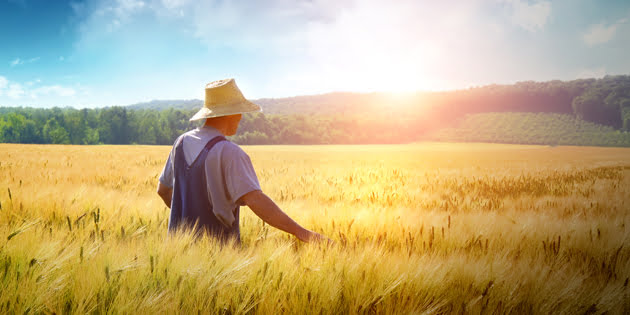
If you cannot become a farmer yourself, make an agreement with a farmer who can supply you with produce grown under controlled conditions. This concept directly relates to controlled production and consumption, particularly for people who do not own farmland, cannot produce their own food, lack agricultural knowledge or live in cities. I believe that in the coming years, we will frequently hear people saying, "My food comes from a farmer I know in such-and-such village. Where do you get yours?"
In fact, this is a form of contractual business model! Both the buyer and the seller benefit. The buyer receives produce with an assured supply, while the seller knows that the entire harvest can be sold. In short, it is a win-win situation…
Inspired by the saying “A doctor in every home,”
we want the idea of “A farmer in every home”
to become a practical reality.
This is a new trend!
We will all see the results together.
Let's wait and see…
References
Apelasyon E-Magazine (http://apelasyon.com)
Wikipedia (https://tr.wikipedia.org/wiki/%C3%87evre_felaketi)
Blog Photos

Writer : Bilge Keykubat
Unless otherwise stated, this published article does not reflect the views of the Izmir Commodity Exchange. 


