
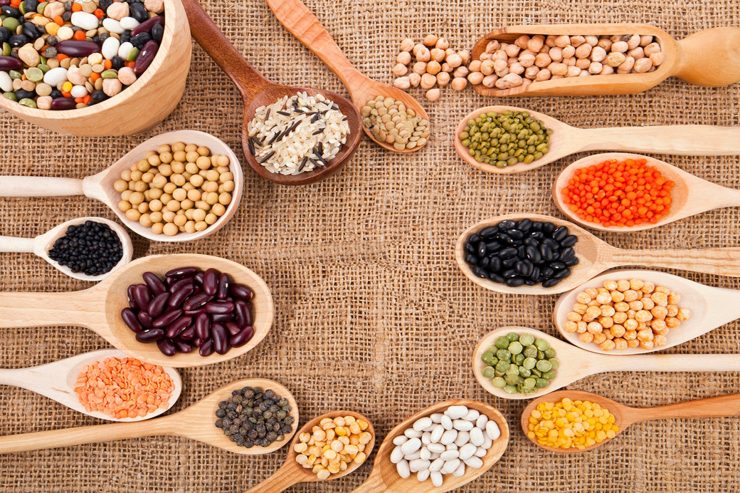
Pulses, which play a very important role in a healthy and balanced diet, are also highly beneficial in helping to combat diseases such as cancer, diabetes and heart disease. Pulses are a source of lean protein with high fiber content and a low glycemic index. With their soluble fiber content, pulses help lower cholesterol and keep blood sugar levels under control, while their insoluble fiber content helps regulate the digestive system.
Pulses provide significant amounts of vitamins and minerals. Some of the main minerals found in pulses include iron, potassium, magnesium and zinc. They are also rich in B vitamins.
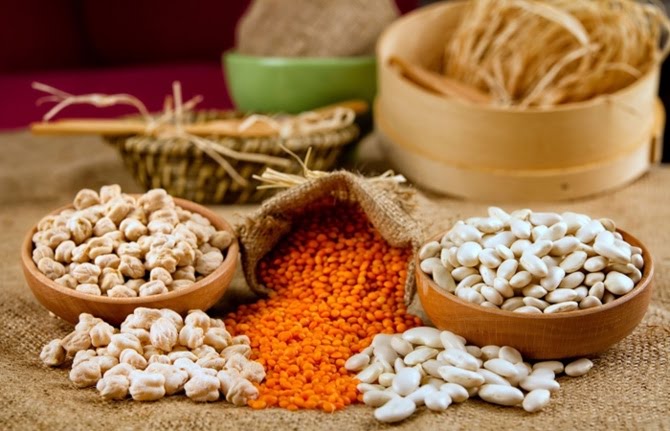
They contain approximately twice as much protein as cereal products such as wheat, oats, barley and rice. As long-lasting and easily storable foods, pulses are the primary source of protein for many low-income families due to their affordability compared with animal-based foods.
According to estimates by the World Health Organization, 80% of diseases such as heart disease, stroke and Type 2 diabetes, as well as one-third of cancers, could actually be prevented through a healthy lifestyle and proper nutrition. This highlights the need to develop the habit of consuming more pulses in order to maintain a balanced diet and reduce the risk of disease. Numerous studies have shown that societies in which pulses have an important place in culinary culture, such as Japan (soybeans, tofu, etc.), Sweden (beans, peas, etc.) and Mediterranean countries (lentils, chickpeas, beans, etc.), tend to have longer life expectancies.
In addition to their major importance in human nutrition, pulses also play a very important role in the ecosystem as a low-cost alternative for animal feed. Approximately 15% to 20% of pulse production, particularly soybeans, is used as animal feed. Thanks to the nutritional values mentioned above, even pulse residues can be used as animal feed, contributing to healthier livestock, improving food security and increasing the productivity farmers obtain from their animals.
Thanks to their positive effects on food security and soil fertility, pulses play an important role in sustainable food production. For example, as is well known, parts of Africa are affected by soil degradation. Nevertheless, pulses remain an important part of traditional diets and can be grown relatively easily, including by smallholder farmers. This is because pulses can be cultivated even in poor soils where many other crops cannot grow. Moreover, thanks to their broad genetic diversity, pulses are a crop group capable of adapting rapidly to the climatic changes we have faced in recent years. By diversifying pulse cropping patterns, farmers can increase yields and improve resilience to climate change and soil degradation.
Despite all these characteristics, we observe that global consumption of pulses has not increased sufficiently. Considering population growth, it can be said that per capita pulse consumption has gradually declined over the years. The world's largest consumers of pulses are China and India, which together account for 40% of total consumption and 37% of the world's population.
For this reason, in order to raise international awareness of the benefits of pulses and encourage action regarding their production, consumption and trade, 2016 was declared the “International Year of Pulses” by the United Nations under the slogan “Nutritious Seeds for a Sustainable Future,” as a result of initiatives in which our country also participated. Within this framework, İzmir Commodity Exchange carried out meticulous work together with the Pulses Working Group established under the coordination of the İzmir Provincial Directorate of Food, Agriculture and Livestock. As a result of these efforts, pulse production, which had remained stagnant in recent years, gained successful momentum as of 2017, with our production of dry beans, chickpeas and lentils increasing by 8%.
Production
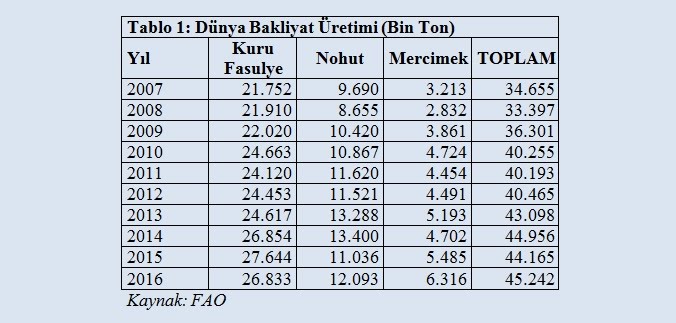
When global pulse production is examined on the basis of the three main products—dry beans, chickpeas and lentils—we see that, as of 2016, production had increased by only 11% over the previous 10 years, reaching 45 million tons. During the same period, however, the world's population increased by 31%, approaching 7.5 billion.
Although urban life and changing living conditions are pushing people around the world to become more conscious of healthy nutrition, we nevertheless see that the share of pulses on dining tables has declined.
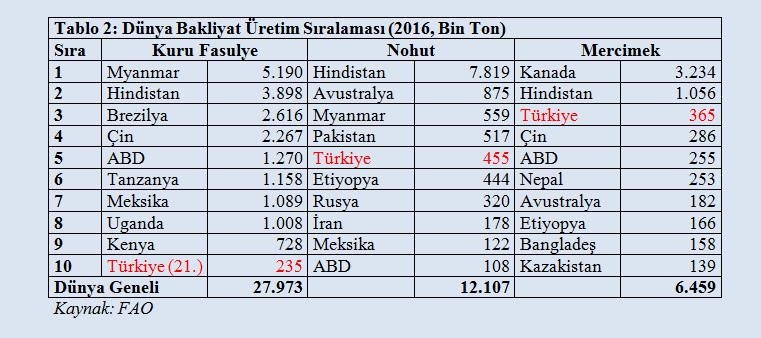
Türkiye's pulse production, on the other hand, manages to stand out to some extent thanks to the important place pulses occupy in the country's traditional culinary culture. According to 2016 data, Türkiye ranked as the world's 5th-largest producer of chickpeas with 455 thousand tons and the 3rd-largest producer of lentils with 365 thousand tons. However, Türkiye did not rank among the top 10 producers of dry beans, placing only 21st.
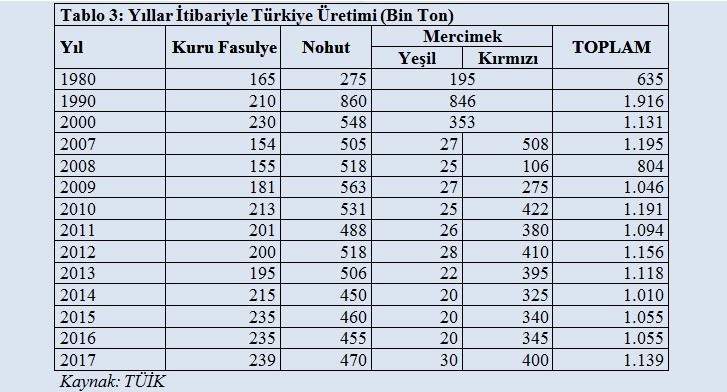
When Türkiye's pulse production is examined over the years, an unstable pattern characterized by periodic increases and decreases can be observed. Moreover, despite the increase in our country's population, a comparison of 2007 and 2017 data for the previous 10-year period shows that only dry bean production increased, by 55%. When 1980 and 2017 are compared, it is clear that the increase in production remained considerably below the rate of population growth. Since 1980, the total increase in the production of these three pulse crops has amounted to only approximately 504 thousand tons. During the same period, Türkiye's population increased by approximately 36 million people, or 81%.
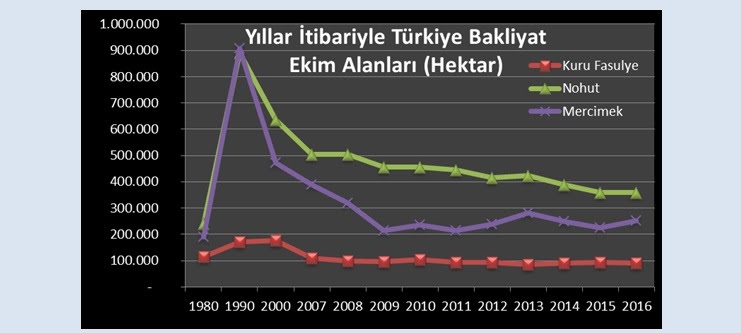
A similar trend can also be observed in pulse cultivation areas. Cultivation areas for the three main pulse crops, which reached their peak in 1990, began to follow a steadily declining trend from the 2000s onward. Since 2007, the total cultivation area devoted specifically to dry beans, lentils and chickpeas has decreased by approximately 301 thousand hectares. Despite this, the fact that there has been no significant decline in total production is an encouraging indication in terms of production efficiency.
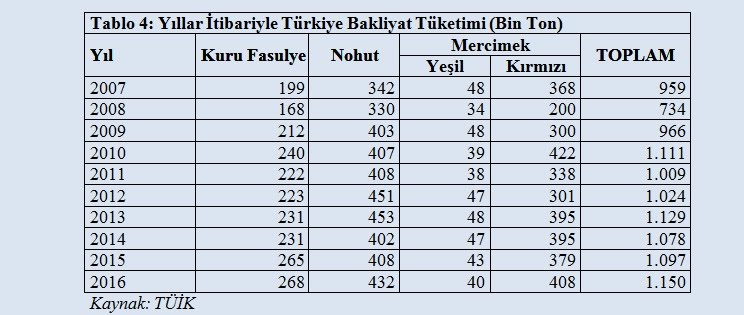
Over the years, our pulse consumption has continuously increased in parallel with population growth. Although lentil consumption has experienced periodic increases and decreases, there has been a decline of 2%, particularly in green lentil consumption, over the last 10 years.
Foreign Trade
Türkiye's pulse production and consumption data present a balanced and mutually consistent picture. Based on this, it can be said that Türkiye produces pulses at a level broadly corresponding to its domestic needs.
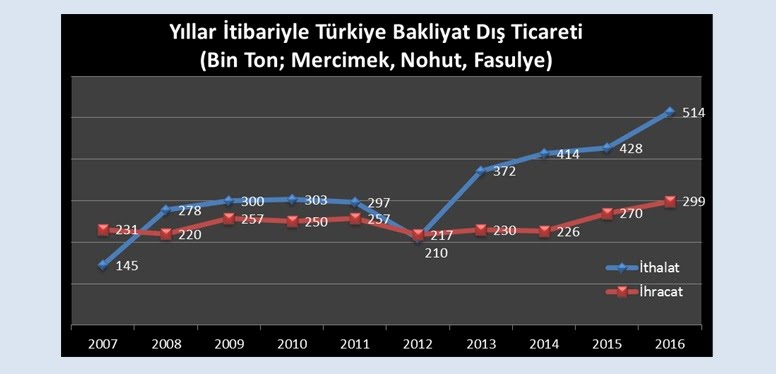
However, when Türkiye's pulse import and export figures are examined on the basis of the three main products, we see that Türkiye has a considerable export volume as well as an import volume significantly higher than its exports. This gap widened particularly in 2016, when pulse imports exceeded exports by approximately 215 thousand tons.
Türkiye holds a key position in the global trade of dry pulses. Of the USD 2 billion in global dry pulse imports recorded in 2017, USD 20 million was accounted for by Türkiye. Türkiye ranked 22nd in global imports.
At the same time, with dry pulse exports worth approximately USD 69 million, Türkiye ranked 6th globally. Türkiye accounted for 5% of global imports, which exceeded USD 1 billion in value.
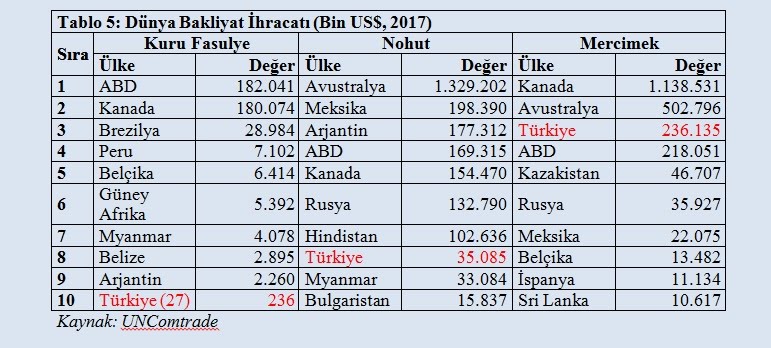
When examined on the basis of the three main products, lentils are the product in which Türkiye has the strongest position in global pulse exports, with a 10% share and an export value of USD 236 million. With chickpea exports worth USD 35 million, Türkiye ranked 8th globally. In global dry bean exports, however, Türkiye remained further behind, ranking 27th with exports worth USD 236 thousand.
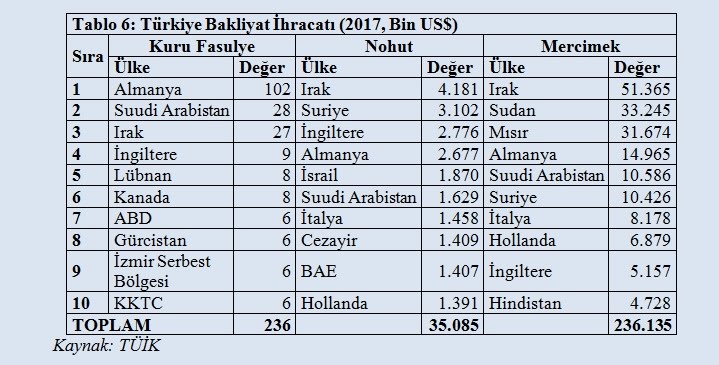
As shown in Table 6, Middle Eastern countries constitute the main destination for Türkiye's pulse exports, while substantial exports to European countries also continue. Germany is Türkiye's largest export market in Europe, with exports totaling approximately USD 18 million.
Source:
Global Pulse Confederation; FAO Global Forum on Food Security and Nutrition - FSN Forum Discussions, Food Outlook: Biannual Report On Global Food Markets,
Blog Photos
Writer : Ar-Ge Müdürlüğü
Unless otherwise stated, this published article does not reflect the views of the Izmir Commodity Exchange. 


