
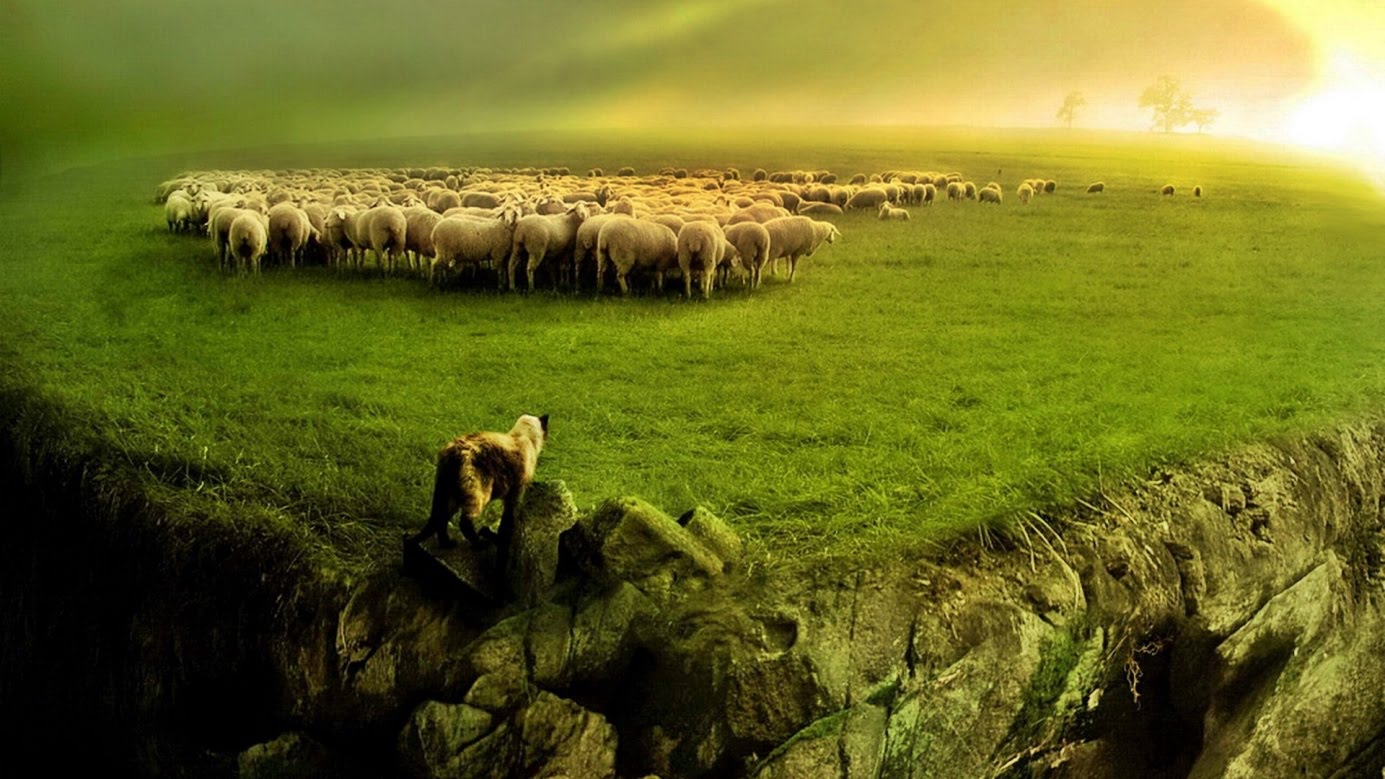
First, let us address the concept of rangelands and their importance. In the literature, rangelands are defined as arid lands with a low groundwater level, where short grasses and similar plants grow. Rangelands may be flat or gently undulating, natural or improved. Within the context and significance of this article, these natural areas (rangelands) are of vital importance to livestock farming. Before discussing this subject in greater detail in the following sections, it is useful to take a closer look at rangelands.
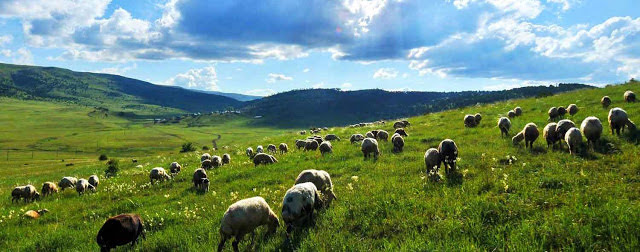
Above all, a rangeland is an ecosystem in itself. This ecosystem provides a habitat, both above and below ground, for thousands of living organisms consisting of plants and animals. So, what should come to mind when we think of rangelands?
- Rangeland = Ecosystem,
- Rangeland = Source of life,
- Rangeland = Plant diversity,
- Rangeland = Animal diversity,
- Rangeland = Natural resource,
- Rangeland = Prevention of erosion,
- Rangeland = Bees, birds, insects,
- Rangeland = Reptiles, rodents,
- Rangeland = Habitat for wildlife,
- Rangeland = Grazing land,
- Rangeland = Livestock farming,
- Rangeland = Sheep – Goats, Cattle – Buffalo,
- Rangeland = Feed source,
- Rangeland = Low feed costs,
- …
Rangelands have countless other roles similar to those listed above. However, as human beings, perhaps we once again fail to appreciate the value of what we have, as our natural rangeland areas continue to shrink every year due to numerous human-induced factors.
Why Are Natural Rangeland Areas Shrinking?
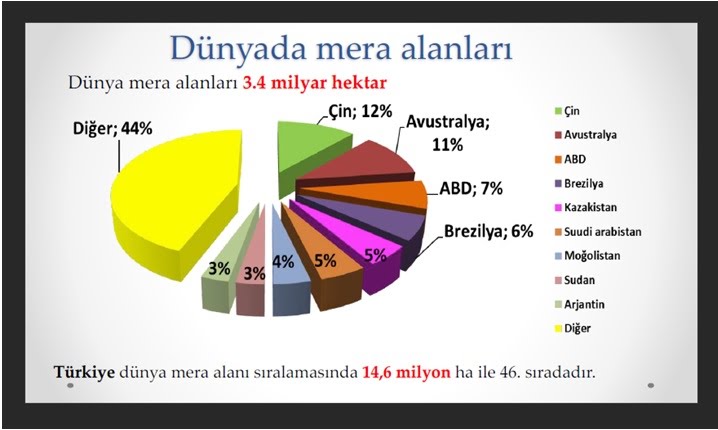
Worldwide, grasslands, rangelands and similar grazing areas account for approximately one-quarter of the total land area of the continents. The proportion is almost the same in Türkiye. In terms of area, grasslands and rangelands constitute the second-largest habitat after forest ecosystems.
The world's total rangeland area is approximately 3.4 billion hectares, and Türkiye ranks 46th with 15 million hectares. The European Union has 181 million hectares of rangeland, while the United Kingdom, with 11.5 million hectares, has the largest rangeland area among EU member countries. The United Kingdom is followed by Spain with 11.1 million hectares and France with 10 million hectares.
Another important characteristic of rangelands is their ability to regenerate themselves. Under normal conditions, in other words without human intervention, grazing lands can sustain themselves within the ecosystem by regenerating naturally through the diversity of plants and animals within their habitats.
In addition to their role within the ecosystem, rangelands also make significant positive contributions to the livestock economy. According to World Bank data, Türkiye, with a population growth rate of 1.2%, which is above the global average, is a country that continues to grow year by year under the combined effects of population growth and global warming. This population increase causes Türkiye to face challenges in ensuring adequate and balanced nutrition. Animal proteins are particularly important in meeting daily human protein requirements. Although at least 33 grams of the daily protein requirement of 70 grams should come from animal sources, this figure is only around 13–17 grams in Türkiye (Cevheri and Polat, 2009). Unfortunately, many underdeveloped countries and developing countries such as Türkiye meet a significant portion of their protein needs from plant-based products rather than animal products. One reason for this is that the prices of meat, milk and other animal products are high for low-income groups. From another perspective, while the world's population, which has exceeded 7.5 billion, continues to grow rapidly, livestock numbers and agricultural land are not increasing at the same rate. Although it is possible to increase livestock numbers, the possibility of expanding agricultural land is extremely limited. This is because creating new agricultural land requires the destruction of forests or grazing areas. Therefore, alternative uses of these resources must be carefully evaluated, and they must be managed in the most appropriate way without damaging the ecosystem.
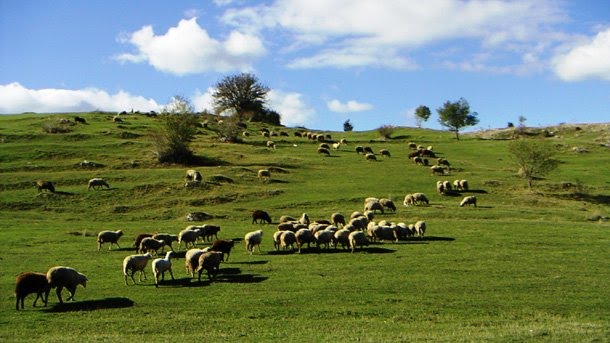
The Importance of Rangelands for Sustainable Livestock Farming:
Source of roughage: Grasslands and rangelands are the primary economical source for meeting the roughage requirements of both small and large ruminants. According to data from the Turkish Statistical Institute, Türkiye had approximately 61 million head of livestock in 2017, including 16 million cattle and 44 million sheep and goats, as well as horses, mules, donkeys, camels and pigs. When the cost of feeding 61 million animals is considered, the contribution of natural grasslands and rangelands to livestock production costs becomes clear.
Despite their vital economic contribution to animal nutrition, grazing areas are unfortunately shrinking year by year, again due to human-induced factors. Türkiye's grazing land resources have declined by half over the past 50 years. One of the primary reasons for this decline is the conversion of grazing lands to other uses, such as agricultural land, construction areas and mining sites. It is particularly difficult to restore rangelands that have been used for mining and construction. The table below shows the changes in rangeland areas across Türkiye's regions over the years.
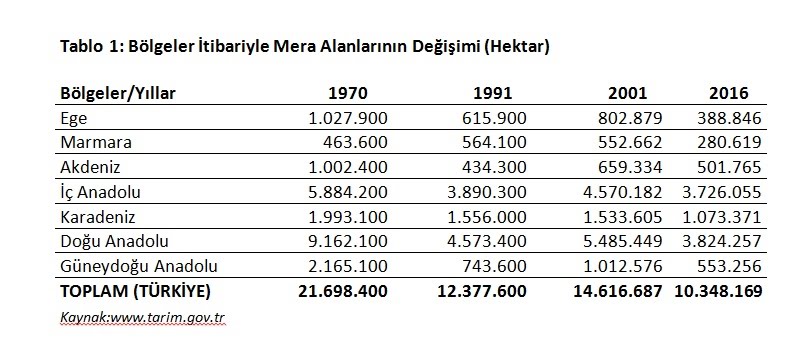
According to a study conducted in 2011, Türkiye's natural grasslands and rangelands, which form the backbone of the country's livestock sector, covered more than half of the country's land area in the 1940s, amounting to 44 million hectares. Today, the total area covered by all grazing lands, including rangelands, has declined to approximately 14.5 million hectares. Due to many years of unplanned, excessive and premature grazing on natural forage areas, vegetation cover has deteriorated and these areas have become vulnerable to erosion. While there were 3.38 hectares of rangeland per livestock unit (LU) in 1940, this figure has fallen to as low as 1.18 hectares in recent years, while the number of grazing animals per unit area has increased threefold (Kuşvuran et al., 2011). Türkiye's Rangeland Law No. 4342, enacted in 1998, and the regulation issued within its scope allow existing rangeland areas to be leased for rehabilitation purposes. For this purpose, identification, delimitation, allocation and rehabilitation activities concerning Türkiye's rangeland resources are known to be continuing rapidly under the leadership of rangeland commissions established in each province pursuant to the Rangeland Law. However, new laws enacted in recent years have made it easier for rangeland areas to be used for mining and similar purposes, accelerating the degradation of grazing lands.
The Role of Rangelands in Preventing Erosion:
Erosion can briefly be defined as the loss of soil caused by disasters such as floods, storms and avalanches. The factor that prevents erosion or minimizes its damage is the natural vegetation covering the soil. Grazing lands, which cover one-quarter of the Earth's land surface, therefore play a vital role in sustaining life and safeguarding the future of our planet.
Türkiye is located within an arid and semi-arid climate zone. In general, precipitation is limited and irregular across the seasons. Consequently, preserving the water obtained from rainfall and snowmelt, whether underground as groundwater or above ground, is of vital importance. This is where grazing lands once again play a crucial role by helping water falling on the Earth's surface collect within catchment basins. Water accumulated underground feeds rivers and contributes to the global water cycle.
Environmental disasters such as erosion damage the life cycle and harm sustainable ecosystems. In general, three different types of erosion are encountered: water erosion (Figure 1), wind erosion (Figure 2) and avalanche erosion (Figure 3). In all three types of erosion, rangelands and natural grazing areas play a role in protecting surface soils.
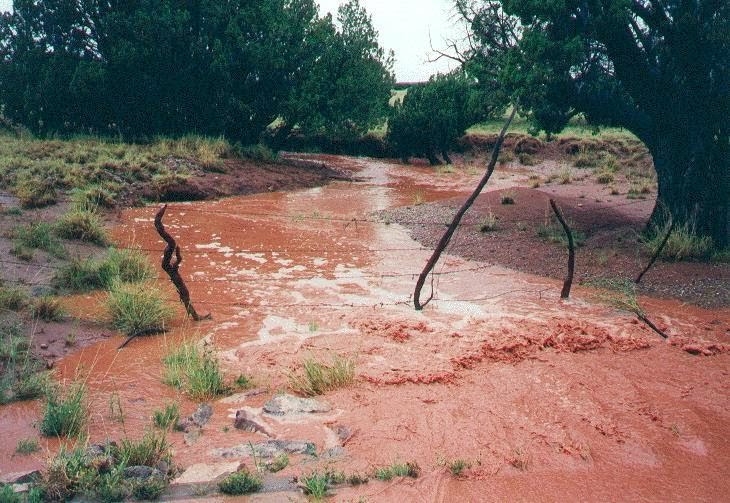
Figure 1: Water Erosion
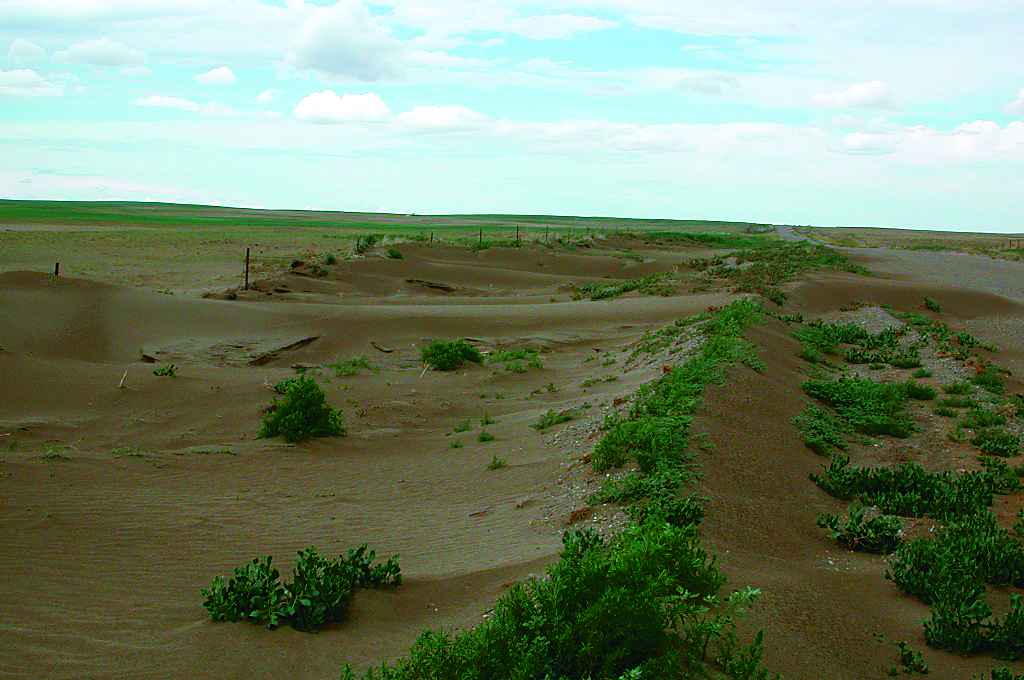
Figure 2: Wind Erosion
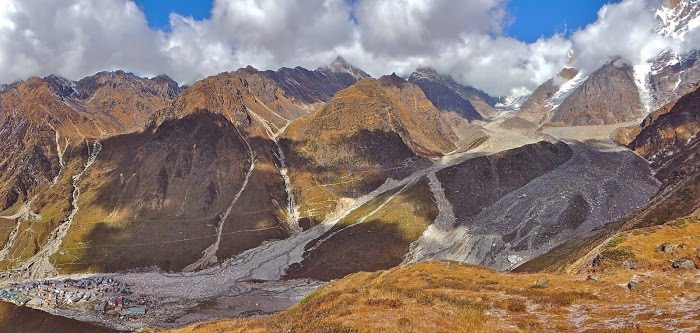
Figure 3: Avalanche Erosion
Conclusion:
We have only one planet. One-quarter of the Earth's land consists of rangelands and similar grazing areas. After forests, grazing lands constitute the second most important component of the global ecosystem. Therefore, rangelands are both a fundamental need and a necessity for sustainable life on Earth. While all natural resources, including rangelands and forests, should be protected and even expanded to ensure a sustainable future, these resources are increasingly being subjected to human economic interests, causing natural areas to shrink year by year.
On the other hand, rangelands are indispensable for reducing dependence on imports and transitioning to sustainable livestock farming. For these reasons, the use of rangeland areas for purposes other than their intended function should be prevented, and rangelands should be rehabilitated and allocated to livestock farming. In this way, the ecosystem will be able to sustain its own life cycle and continue to serve humanity unconditionally.
Article 14 of Rangeland Law No. 4342 contains provisions that facilitate changes in the designated use of rangeland areas. This article plays an important role in the shrinkage and disappearance of rangelands. Repealing Article 14 of the Rangeland Law and placing rangeland areas under protection is of vital importance for the future of both our lives and livestock farming.
It should not be forgotten that a sustainable future requires a sustainable ecosystem and all of its components, including rangelands.
References:
Cevheri, A.C., Polat, T., 2009. Şanlıurfa’da yem bitkileri tarımının dünü, bugünü ve yarını. HR.Ü.Z.F. Dergisi. 13(1): 63–67.
Kuşvuran, A., Nazlı, R.İ., Tansı, V., 2011. Türkiye’de ve Batı Karadeniz Bölgesi’nde çayır–mera alanları, hayvan varlığı ve yem bitkileri tarımının bugünkü durumu. GOÜ Ziraat Fakültesi Dergisi. 28(2): 21–32.
Blog Photos
Writer : Kenan Keskinkılıç
Unless otherwise stated, this published article does not reflect the views of the Izmir Commodity Exchange. 


